
What Do You Say?

By the time I was 15 I’d lived in 8 states. I noticed the languages spoken in various parts of the county. It was all English but different places have their own dialect.
In Arkansas, where my dad was from, I picked up plenty of ya’ll and yonders. Apparently a bit of an accent to, or so my High School English teacher in Baltimore thought.
At elementary school in Louisiana I learned when my classmates asked if they could go to the basement they were referring to the restroom. High School in Utah, sluffing was their slang for skipping class. It was good training for listening to more than the way words were said but how they were said. Context matters.
When my parents asked, ‘What do you say?’ there were three different options for us to choose: Thank you. Excuse me. And the all too common, Sorry.
Throughout my life I continue to pay attention to the words and context. Who speaks encouragement and who speaks fear. Those who are hesitant to speak at all and those you’d like to mute. Is there sincerity or showmanship?
Yet it’s not about the quantity of words but the situation, the emotion. Are they generous or holding back? Our words often tell our story.
In my youth, I also heard another language spoken when people prayed. They used words that I only heard during prayer. Antiquated words from the King James Bible that I understood only from the context of church. No one ever said thou except when they prayed.
Maybe that’s why I’ve often heard people say they don’t know how to pray. They’ve heard prayers dressed up with Thee and Thou or prayers long enough to put you to sleep. When you don’t understand the words you stop listening.
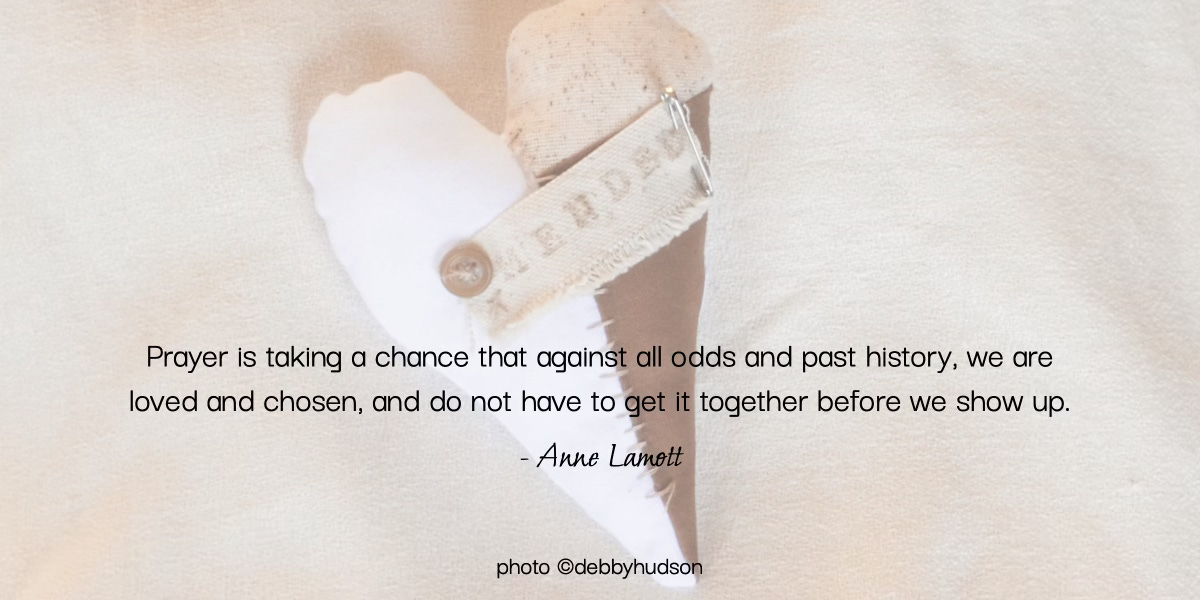
Prayer means that, in some unique way, we believe we’re invited into a relationship with someone who hears us when we speak in silence.
— Anne Lamott
I went through a season when I wrote my prayers. It helped me keep track of people I wanted to pray for. The words in these prayers were clearly meant to be heard by Jesus and He knows every language, even those said in desperation. He knows, beyond our words, the desires of our hearts.
I have the privilege of praying with men in a residential recovery program. At the end of our Zoom counseling sessions I ask if I can pray for them. Not all are followers of Christ and while they know the program is a result of the organizations commitment to be the hands of Christ I respect them. No one has ever told me no. So I pray, in words I hope they understand. Words specifically meant for them. Words that include what Anne Lamott says are the three essential prayers: Help, Thanks, Wow.
In her book, Help Thanks Wow: The Three Essential Prayers, Anne Lamott sums up the essentials of prayer.
Prayer isn’t about surroundings or time of day or being in different states or said on Zoom.
It’s about the context or our words which are often feeble and limited. How can we fully express our gratitude or pleadings or astonishment with only words?
In the same church setting that people have used Thee and Thou I’ve heard these words, God hears your heart. Oh yes, yes! He hears everything I can’t put into words. He hears our hearts.
So, what do you say?
I think I'm becoming more wordless ... and that's been a very helpful step in listening better.
I agree, Linda. When I'm counseling the listening always comes first. It's helpful for me to repeat some of the things they've said in my prayer. It reminds me I'm not the only one listening.